Vaccinations have revolutionized modern medicine, saving millions of lives and effectively eradicating several deadly diseases. Despite their proven benefits, misinformation and misconceptions about vaccines persist. This blog aims to provide a comprehensive understanding of vaccinations, their importance, and how they contribute to a healthier society.
What Are Vaccinations?
Vaccinations, commonly referred to as immunizations, are medical interventions designed to protect individuals from infectious diseases. They work by introducing a weakened or inactive form of a pathogen, or a piece of it, into the body. This exposure stimulates the immune system to recognize and combat the disease without causing the illness itself. Once the immune system learns to fight the pathogen, it can respond more effectively if exposed in the future.
The History of Vaccinations
The concept of vaccinations dates back to 1796 when Edward Jenner introduced the first vaccine to combat smallpox. This groundbreaking discovery paved the way for the development of vaccines against diseases such as polio, measles, and hepatitis. Over the decades, advancements in science and technology have led to safer, more effective vaccines that protect millions worldwide.
How Do Vaccines Work?
Vaccines operate on the principle of building immunity. When the body encounters a vaccine, it:
- Recognizes the Antigen: The immune system identifies the foreign substance as harmful.
- Produces Antibodies: Specialized proteins, called antibodies, are generated to combat the antigen.
- Creates Memory Cells: These cells remain in the body, ensuring a faster and stronger response if the real pathogen is encountered in the future.
Types of Vaccines
Modern vaccines come in several forms, each tailored to combat specific pathogens:
- Live-Attenuated Vaccines: Contain a weakened form of the virus or bacteria (e.g., MMR vaccine).
- Inactivated Vaccines: Use killed pathogens (e.g., polio vaccine).
- Subunit, Recombinant, Polysaccharide, and Conjugate Vaccines: Include parts of the pathogen, such as protein or sugar (e.g., HPV vaccine).
- mRNA Vaccines: Use genetic material to instruct cells to produce a harmless protein, triggering an immune response (e.g., COVID-19 vaccines).
Why Are Vaccinations Important?
- Disease Prevention: Vaccines protect against severe illnesses like measles, influenza, and meningitis.
- Herd Immunity: When a significant portion of a community is vaccinated, it limits the spread of disease, protecting those who cannot be vaccinated.
- Global Health: Vaccination programs have eradicated diseases such as smallpox and significantly reduced polio cases worldwide.
- Economic Benefits: Vaccines reduce healthcare costs by preventing hospitalizations and long-term complications from diseases.
Vaccinations and Medical Billing and Coding
The role of medical billing and coding in vaccination programs is crucial for ensuring proper documentation, reimbursement, and healthcare access. Here’s how it connects:
- Accurate Coding for Vaccines: Vaccinations are assigned specific CPT (Current Procedural Terminology) and ICD-10 codes to identify the type of vaccine administered and the purpose of the visit. Accurate coding ensures healthcare providers are reimbursed correctly.
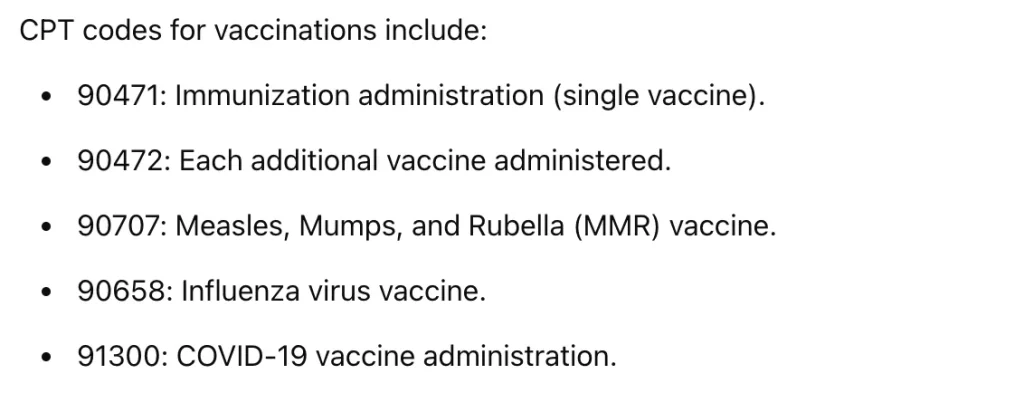
- Insurance Verification: Before administering vaccines, medical billers verify patient insurance coverage to determine out-of-pocket costs and eligibility for vaccination programs.
- Claims Submission: Properly coded claims help in seamless submission and faster reimbursements from insurance providers, minimizing delays.
- Denials and Resolutions: Vaccine claims can sometimes be denied due to incorrect coding, lack of medical necessity documentation, or expired insurance coverage. Resolving these denials involves:
- Reviewing denial codes to identify the issue.
- Verifying patient information and eligibility.
- Correcting coding errors or providing additional documentation.
- Resubmitting claims promptly to avoid financial loss.
- Public Health Data: Coding plays a role in gathering vaccination data for public health studies and policy-making.
- Compliance and Auditing: Medical billing professionals ensure that vaccine-related claims adhere to regulations, reducing the risk of audits and penalties.
- Reviewing denial codes to identify the issue.
- Verifying patient information and eligibility.
- Correcting coding errors or providing additional documentation.
- Resubmitting claims promptly to avoid financial loss.
Efficient medical billing and coding practices enable healthcare providers to focus on patient care while maintaining the financial health of their practices.
Common Misconceptions About Vaccines
- Vaccines Cause Autism: Multiple studies have debunked this myth, confirming no link between vaccines and autism.
- Natural Immunity Is Better: While natural infection can confer immunity, the risks of severe complications far outweigh the benefits.
- Vaccines Contain Harmful Ingredients: Vaccine components, such as preservatives and stabilizers, are used in safe, regulated amounts.
- Too Many Vaccines Overwhelm the Immune System: The immune system can handle multiple vaccines simultaneously without any adverse effects.

The Role of Vaccinations in Public Health
Vaccinations are a cornerstone of public health strategies. They:
- Control Outbreaks: Vaccines prevent the spread of contagious diseases.
- Protect Vulnerable Populations: Infants, the elderly, and immunocompromised individuals benefit from community vaccination efforts.
- Support Eradication Efforts: Diseases like polio are on the brink of eradication, thanks to global vaccination initiatives.
Vaccination Schedules and Recommendations
Healthcare organizations, such as the CDC and WHO, provide vaccination schedules tailored to different age groups and risk factors. Adhering to these schedules ensures timely protection against preventable diseases. Key vaccines include:
- Childhood Vaccines: MMR, DTaP, polio, and rotavirus.
- Adolescent Vaccines: HPV and meningococcal.
- Adult Vaccines: Influenza, shingles, and pneumococcal.
- Travel Vaccines: Hepatitis A, typhoid, and yellow fever.

FAQs About Vaccinations
Q: Are vaccines safe?
A: Yes, vaccines undergo rigorous testing and monitoring to ensure their safety and efficacy.
Q: Can vaccines cause side effects?
A: Mild side effects, such as soreness at the injection site or a low-grade fever, are common and temporary. Serious side effects are extremely rare.
Q: Why do some vaccines require boosters?
A: Booster doses strengthen and prolong immunity, ensuring continued protection.
Q: Can I get vaccinated if I am pregnant?
A: Some vaccines, like the flu and Tdap vaccines, are recommended during pregnancy to protect both mother and baby.
Q: What should I do if I miss a scheduled vaccine?
A: Consult your healthcare provider to catch up on missed vaccinations. Delays do not require restarting the entire series.
Q: How does medical billing handle vaccine administration?
A: Medical billing ensures accurate documentation and reimbursement for vaccines, helping providers maintain financial sustainability and offering patients access to necessary immunizations.
The Future of Vaccinations
The field of vaccinology continues to evolve, with researchers developing vaccines for emerging diseases and improving existing ones. Advances in technology, such as mRNA and vector-based vaccines, have opened new frontiers, promising faster and more efficient responses to global health threats. Similarly, medical billing and coding systems are advancing to support this evolution, ensuring streamlined processes and better data management.
Strengthening Public Health: Vaccinations and Accurate Billing
Vaccinations are a powerful tool in the fight against infectious diseases. By protecting individuals and communities, they contribute to a healthier, safer world. Staying informed and adhering to recommended vaccination schedules is a responsibility we all share. Together, we can combat misinformation, promote vaccine confidence, and ensure a brighter future for generations to come. Additionally, efficient medical billing and coding practices play an essential role in sustaining vaccination programs and supporting public health initiatives.
Learn more about our services on our Pre-Authorization Assistance page.
Visit our services for more details.
Visit our homepage for more details. easycarebilling.com. Contact us Today @ 502-514-9155
Instagram: https://www.instagram.com/medicalbillling/
Twitter: https://twitter.com/vicky_easycare